
Poker
HUDs in Online Poker: What the Stats Actually Mean
A HUD is a feedback system that turns poker decisions into data points. Understanding what the data is measuring is the difference between a tool and a crutch.
By Dmitri Volkov4 min read
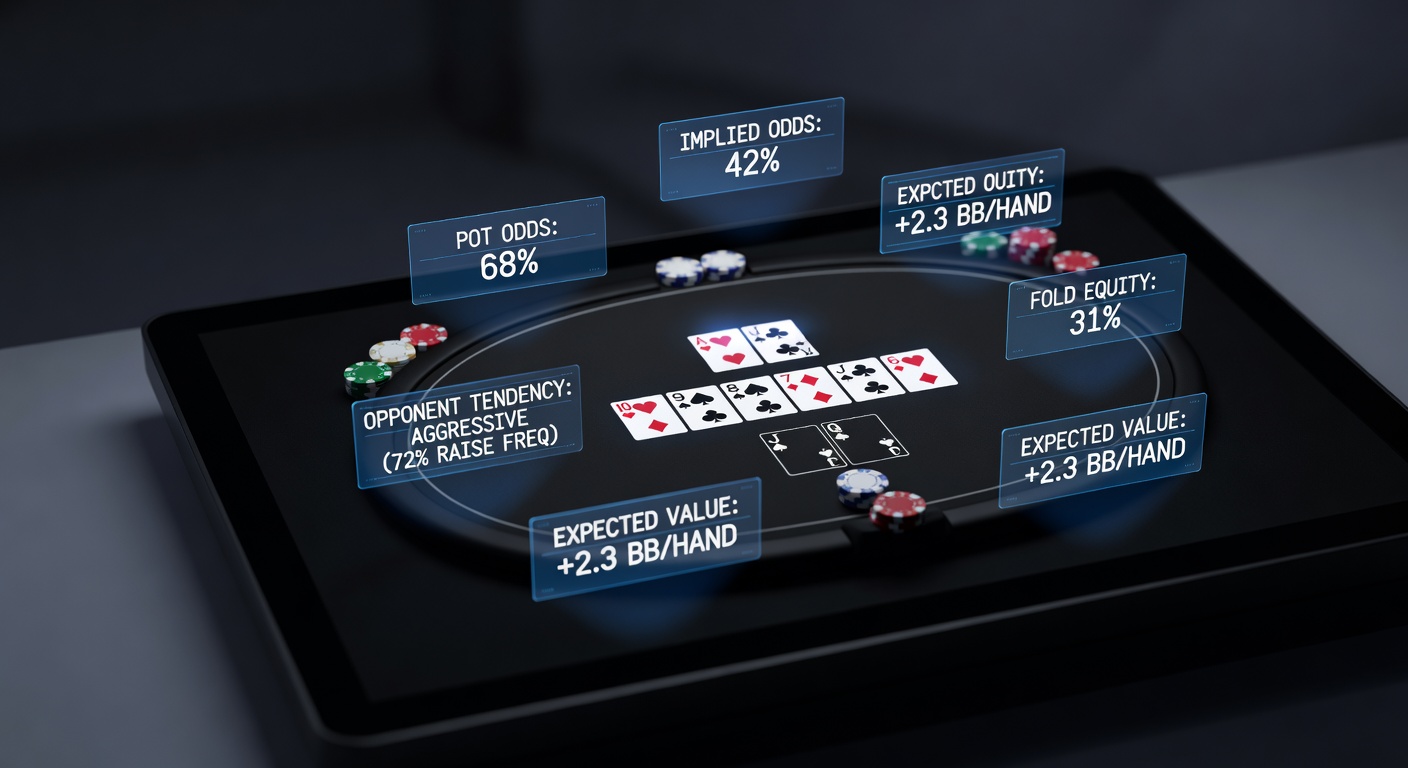
A HUD (Heads-Up Display) is software that overlays information about your opponents on your poker table. It pulls data from hand histories and displays win rates, aggression frequencies, positional tendencies, and specific hand percentages. It sounds like a cheat code. It's not.
The core mechanic: every decision is tracked. When Player X is on the button, how often does he open a raise? When faced with a 3-bet, what percentage of the time does he fold? How often does he check-raise flops? Bet rivers with strong hands versus weak hands? The HUD computes these frequencies and displays them in real-time.
Key Concepts
The feedback loop is the game design. Without a HUD, you're playing from memory and reads. You notice patterns only if you're paying attention. With a HUD, the patterns are quantified. You can adjust your strategy based on concrete numbers instead of intuition.
But here's the design flaw that players miss: the data is only meaningful in large sample sizes. A stat showing "80% fold to aggressive re-raise" is actionable if it's based on 200 hands. It's noise if it's based on 20. Most recreational players look at HUD stats on opponents they've just started playing against. They don't account for sample size. They see what looks like a pattern and act on it.
This is a gameplay system design problem. The HUD shows you data without showing you the variance around that data. It tells you "80% fold" without telling you "but the confidence interval is so wide that this could be 60 percent or 95 percent."
Another design layer: positional variance. An opponent's 40 percent raise frequency from the button is different from their 40 percent raise frequency from the small blind. The HUD should show positional breakdowns, but many players don't look at them. They see "40 percent" globally and assume it's consistent.
The aggression factor is a commonly misunderstood stat. It measures how often a player bets or raises relative to checking or calling. High aggression doesn't mean the player is reckless; it might mean they're playing a sound aggressive strategy. Low aggression doesn't mean they're weak; it might mean they're playing a balanced mixed strategy. The stat requires context.
Onecommon trap: assuming static stats apply to dynamic games. Your opponent might be 25 percent to steal the button with a 35 percent re-steal from the big blind. But if you just re-stole from the big blind and got called, the situation is not static anymore. Your opponent is making a decision with new information: you've shown up with a re-steal, and they're adjusting. The HUD can't show you this real-time adjustment.
Professional players use HUDs as one input among many. They use it to identify tendencies, not to program decisions. They adjust based on sample size, position, game dynamics, and meta-game factors that the HUD doesn't capture. Recreational players often use HUDs as a substitute for thinking. They see a stat and make a decision based entirely on that stat.
The win rate stat is particularly deceptive. A HUD can show Player X wins 5 big blinds per 100 hands. But this stat includes all games, all positions, all opponents. If Player X faces me and loses consistently, and faces my friend and wins consistently, the overall win rate is misleading. The stat doesn't show the matchup-specific dynamics.
Another design layer I notice: the HUD encourages over-analysis. Players spend time staring at statistics instead of playing hands. They get distracted by the data and make slower decisions. In online poker, decision time matters. You only have 30 seconds to act. If you're reading HUD stats, you're not thinking about the specific situation.
The most valuable HUD stat is probably position-specific 3-bet frequency. This shows you whether an opponent is pushing more from late position, which is exploitable. The least valuable is overall win rate, which has so much variance and is so situation-dependent that it's almost meaningless.
The evolution of HUD use parallels the evolution of poker itself. When HUDs first appeared, they gave their users an advantage. Now every serious player uses one, so the information advantage is gone. Everyone has the same data. The difference is in interpretation and application.
My view as a game designer: HUDs are a system that works best for advanced players who understand their limitations. For intermediate players, they're often worse than no information because they encourage overconfident decisions based on incomplete statistics. For beginners, they're just noise.
The best way to use a HUD is to let it inform your strategy over time, not to make individual hand decisions. Identify tendencies, construct counter-strategies, and test them in play. The data is a starting point, not a destination.