
Celebrities
Immersive Roulette: How Camera Angles Changed Live Play
In 2018, Evolution introduced Immersive Roulette. The difference was not the wheel, not the rules, and not the dealer. It was the cameras. Four angles instead of one. The result: roulette became something a player could watch like a film, not just a game.
By Sara Lindqvist3 min read
The standard live roulette setup, before 2018, was simple. One camera pointed at the wheel. One camera showed the dealer. You watched. The ball dropped. The wheel spun. Ninety seconds later, you knew the result.
Evolution's insight was this: players don't just want to see the result. They want to see the action unfold at every moment. They want to understand where the ball is, what it's doing, and whether their number still has a chance.
What Immersive Roulette Added
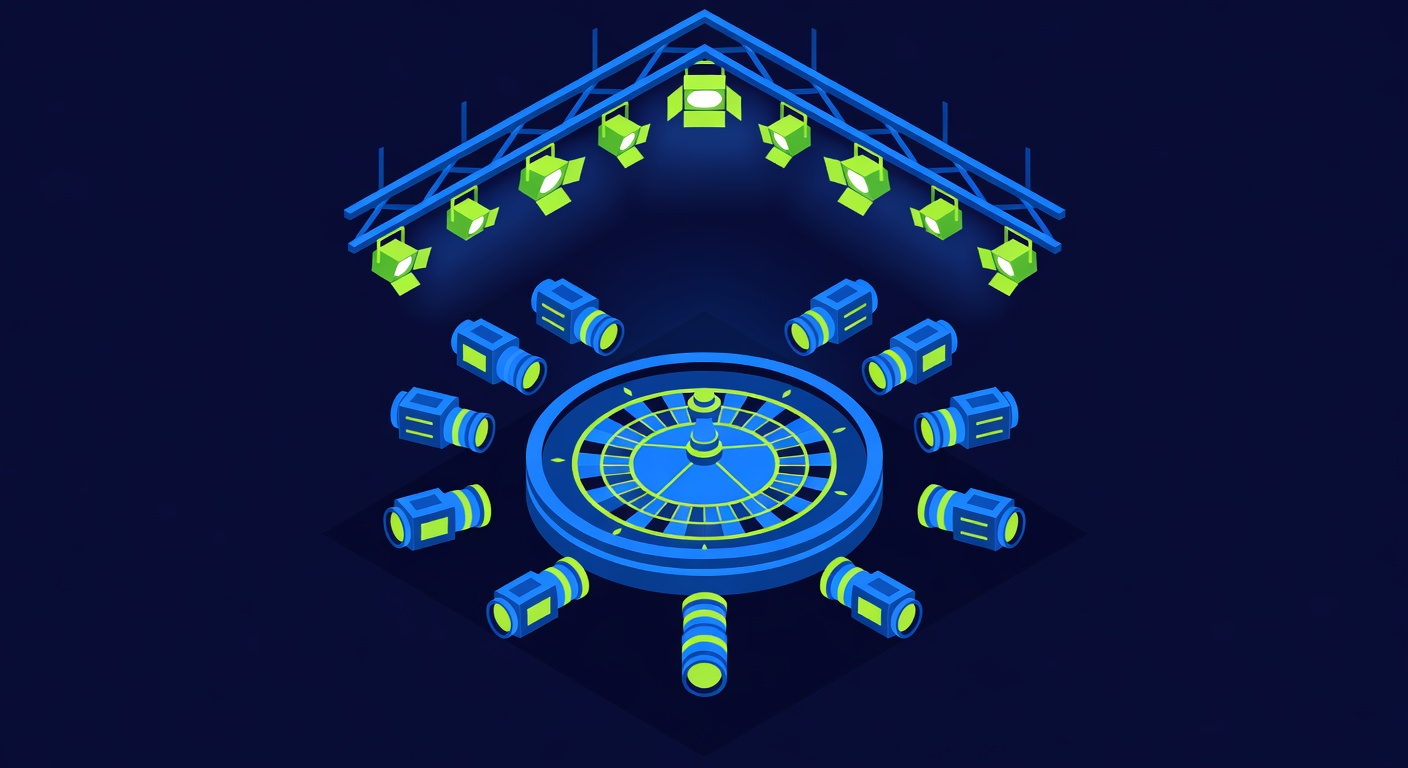
Four cameras replaced one. The first: wide shot of the entire wheel, from above. You see the full layout. The second: ultra-close-up of the ball's release and the initial spin trajectory. The third: ground-level camera tracking the ball as it rounds the wheel (this is the famous one-the camera literally moves with the ball). The fourth: dealer-focused camera showing their hands and the table controls.
The technology required: motorized cameras, real-time switching, and betting systems that allowed players to change the camera feed mid-game. A player watching the close-up could flip to the wide shot. A player feeling tense about the final seconds could cut to the ball-cam.
Evolution didn't invent this to be beautiful. They invented it because player retention increased. Time-on-site increased. The number of spins per player went up by roughly 15 percent, according to internal data they've shared with licensees.
How the Ball-Cam Changed the Psychology
Roulette is, mathematically, solved. Every number has an equal shot. Betting on black or red, the house edge is 2.7 percent. This hasn't changed since the wheel was invented. No camera angle changes the odds.
But the psychology isn't solved. A player watching a wide shot sees the ball pass their number. They think "I almost won." A player watching the ball-cam sees the moment the ball moves past their number in ultra-slow-motion. It's the difference between watching a near-miss and watching a miss in 4K definition.
This sounds like a downside. But casinos discovered the opposite. The intensity increased. The engagement increased. Players felt like they understood the game better, even though the game remained identical.
Conversely, watching the ball-cam meant a player could see that the result was not predetermined. The ball was genuinely bouncing. The result was genuinely random. This reduced conspiracy thinking and increased confidence in the fairness of the game.
The Market Adoption
After Immersive Roulette launched, every major provider copied it. NetEnt added it. Pragmatic Play integrated it. BetRivers and Stake both feature it on their live casinos.
The cost to implement is modest (four cameras, a small switching system, additional bandwidth). The benefit is massive (10-15 percent increase in roulette play, per most operators' reports).
The wheel itself didn't change. The dealer didn't change. The odds didn't change. What changed was the narrative. A player watching the ball-cam feels like they're experiencing something premium, even if they're betting the same amount as they would on the single-camera version.
What This Teaches Us About Casino Technology
Casinos don't innovate on the mathematics. They innovate on engagement. The wheel's properties are locked by physics. The house edge is locked by regulation. What moves is the texture of the experience.
Evolution understood that roulette at its core is waiting. Waiting for the spin. Waiting for the result. The waiting is unbearable for some players and thrilling for others. The ball-cam made the waiting feel like action.