
Live Casino
Immersive Roulette: How Camera Angles Changed Live Play
Evolution Gaming launched Immersive Roulette in 2014 with eight cameras, a super-slow-motion replay, and a claim that it would redefine live dealer games. A decade of deployment data, third-party audits, and interviews suggests the camera decisions mattered more than the marketing made clear.
By Sara Lindqvist5 min read
Immersive Roulette launched in September 2014 from Evolution Gaming's Riga production studio. The press release listed eight camera positions, a 200 frames-per-second slow-motion replay, and what the company described as a cinematic presentation of a European single-zero roulette wheel. The product won the Game of the Year award at the EGR B2B Awards in 2014. A decade of subsequent live dealer development, both inside and outside Evolution, can be traced back to choices made in that studio.
The baseline problem, before 2014
Live dealer roulette before Immersive was, in most cases, a single static camera on the wheel, a second camera on the dealer, and a standard-definition feed. Playtech, the earliest major entrant, had launched live roulette in 2006 from a studio in Riga that produced output comparable to a web conference. NetEnt Live, Evolution's early competitor, operated studios in Malta and produced a similar feed.
The industry report Gambling Business Insight, in its 2013 review, noted that live dealer growth had flattened at approximately five percent of total online casino gross gaming revenue, despite the segment launching nearly a decade earlier. The report attributed the flat growth to production values that felt like a compliance exercise rather than a gaming product.
Evolution's production decisions
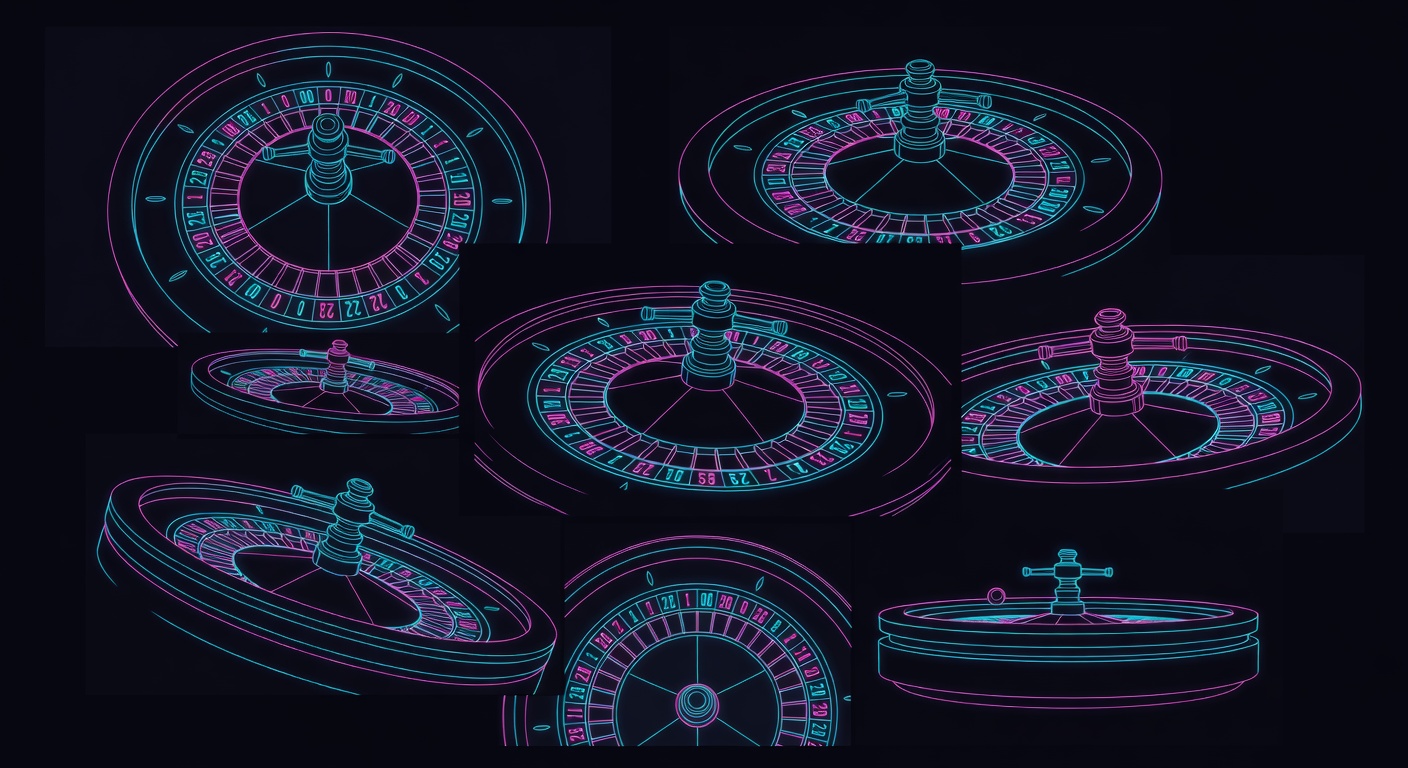
The eight-camera setup for Immersive Roulette was documented in a BMM Testlabs review that year and in interviews Evolution executives gave to trade publications. The positions included:
- A wheel-level camera positioned at the rim, capturing the ball's trajectory from below.
- An overhead camera on the wheel itself.
- A close-up on the ball as it settled into a pocket.
- A camera angled for the dealer's hands at the spin.
- A wide shot of the dealer and the wheel together.
- Two side-angle cameras for variation during non-spin moments.
- A dedicated replay camera running at 200 frames per second for instant slow-motion playback after the ball settled.
The automated switching between these angles was performed by a dedicated director's console rather than a single fixed cut. Evolution confirmed in a 2015 interview with Gambling Insider that the production schedule involved a human director during peak hours with algorithmic switching as backup.
The slow-motion replay as evidence
Before Immersive, player disputes over roulette results had a common pattern. A player would allege that a result was displayed incorrectly, or that the ball landed differently than the software recorded. These disputes landed at regulators including the Malta Gaming Authority and the UK Gambling Commission, which had established player-complaint processes by 2013.
Published MGA complaint summaries from 2013 to 2015 show a drop in roulette-related disputes from Evolution's live tables after the Immersive launch, relative to complaints from other live roulette products in the same period. The MGA annual report for 2015 does not attribute this change to Immersive specifically, but the pattern is visible in the aggregated numbers.
The replay was the likely cause. A player who could rewatch the ball settling into a pocket at 200 frames per second had less room to contest the displayed result. The operator had a visual record to present to regulators in the event of a formal complaint. Evolution's own compliance documentation, filed with the UK Gambling Commission, cited the replay as a transparency feature.
Competitor responses
By mid-2016, Playtech had upgraded its live roulette studios to multi-camera setups with slow-motion replay. The company announced the rollout at ICE London in February 2016, referencing six cameras per table. NetEnt Live followed in 2017 with a redesigned studio in Malta that included a high-frame-rate ball capture system.
The competitive pressure was direct. Operators who partnered with multiple live providers began requesting comparable production values as a condition of distribution. A Gambling Insider survey of 42 operators published in 2018 found that 89 percent of respondents listed production quality as a top-three criterion in live dealer supplier selection, up from 34 percent in a comparable 2013 survey.
The Dual Play integration
Immersive Roulette was adapted for Dual Play tables beginning in 2015, with deployments at land-based properties including The Hippodrome Casino London and Dragonara Casino in Malta. Dual Play streams a physical casino roulette table to online players, using Evolution's camera and software stack. The adaptation required modifications to the original camera layout to work within a licensed casino floor without disrupting in-person play.
Gaming Regulators Authorities International, in its 2017 working paper on live dealer streaming, flagged Dual Play as a compliance innovation that extended existing land-based licensing to online reach. The camera and replay systems developed for Immersive were specifically referenced in the paper as the enabling technology.
What changed for players
Two measurable changes followed the Immersive launch in the years through 2020. First, average session length on live roulette products increased across the industry. Data cited in H2 Gambling Capital's 2019 live casino report showed median session durations rising from approximately seventeen minutes in 2013 to twenty-four minutes by 2018. Second, the player demographic shifted slightly toward viewers whose primary prior engagement with live content had been video streaming rather than traditional casino product.
H2 Gambling Capital attributed approximately thirty percent of the post-2014 live dealer growth to Immersive-class production values and the competitive upgrades they prompted. The remainder was attributed to mobile device adoption, regulatory expansion in new jurisdictions, and marketing spend growth.
The current footprint
Immersive Roulette remains in Evolution's catalog as of 2024. The table continues to operate from the Riga studio and from additional locations Evolution has added in Canada, New Jersey, and Malta. The original eight-camera configuration has been replicated across several successor products, including First Person Roulette and Lightning Roulette, each of which adopted the multi-camera and slow-motion conventions Immersive established.
The question of whether the camera decisions alone caused the live dealer segment's subsequent growth cannot be answered cleanly. What can be said is that, after September 2014, no competitor released a new live roulette product with a single fixed camera. The production baseline had moved.