
Live Casino
How Live Casino Streams Are Produced Behind the Scenes
A live casino stream is a carefully choreographed production where every element is controlled except the outcome. The cameras are never in the wrong place. The audio is never unclear. The games are always fair. These three things cannot all be true simultaneously.
By Sara Lindqvist3 min read
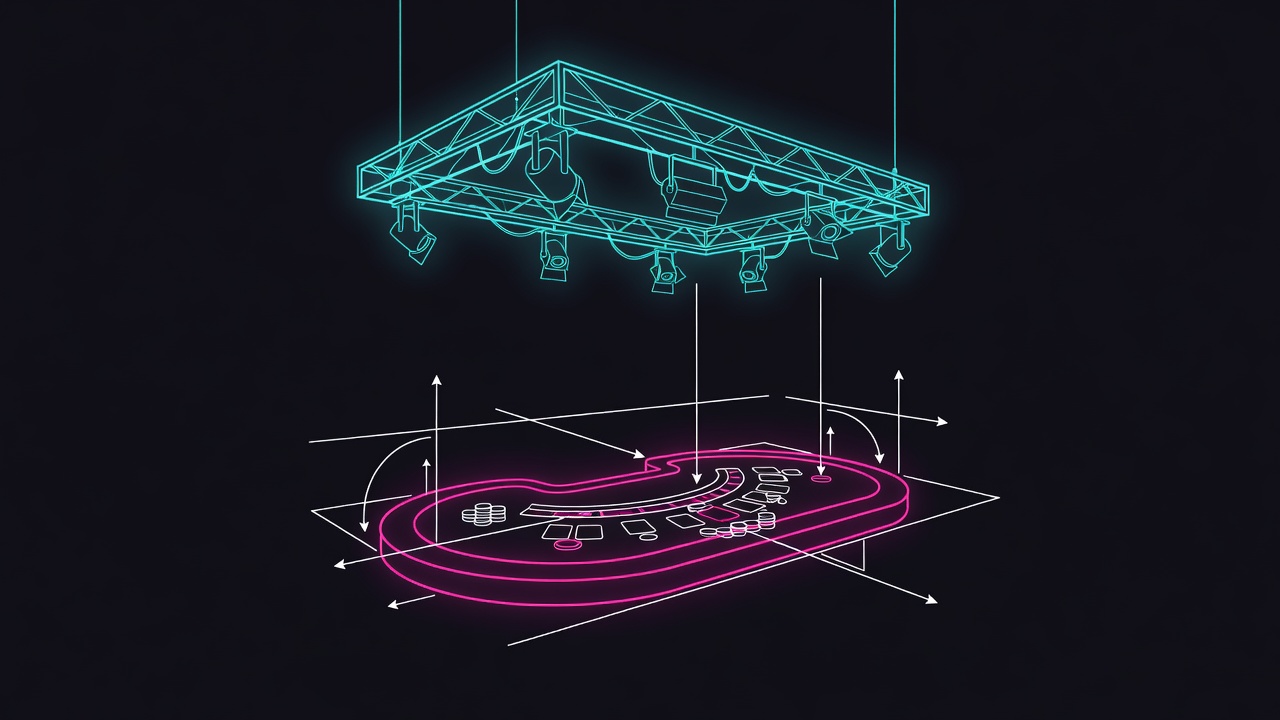
The studio has better lighting than most television productions. This is because cards and chips need to be visible from multiple angles in HD. The light temperature is controlled so that every camera sees the same colors. If one camera gets 5000K and another gets 6500K, the cards look different and players notice.
The dealer is miked, though you might not hear it clearly. The microphone is there to catch any dealer errors or unusual statements. It also creates evidence that can be reviewed if a hand is disputed. The dealer doesn't think about the microphone, which is exactly the right state for it to be in.
Key Concepts
Multiple camera feeds run simultaneously. This is redundancy, but also efficiency. The director cuts between them based on what's happening on the table. Shoe open, show the shoe. Cards dealt, show the cards. Outcome clear, show the discard. The rhythm is programmed into the director's brain after thousands of hands.
The software that manages the feed is proprietary and expensive. Evolution Gaming's Director interface lets the operator cut between cameras, zoom, and frame the action in real-time. This looks effortless to the viewer. The seams are visible if you know to look for them: a camera lag, a cut that's one frame off, a moment where the action jumps because the replay is behind.
The audio mixing happens in real-time. You hear the dealer calling the action clearly. You hear chips being moved. You hear cards sliding from the shoe. Someone is managing the audio levels in real-time, ensuring nothing is too loud and nothing is lost in the mix. If they slip up, you hear a spike of noise or a moment of quiet.
Quality assurance is constant. Regulators require that every hand is recoverable from the video and server logs. This means the production has to maintain quality that would hold up in court. A casino with poor production quality is a casino that's set itself up for disputes.
The most interesting part is what's not visible. The server farm recording everything. The backup drives storing redundant copies. The encryption making sure the video hasn't been tampered with. The audit logs tracking who accessed the footage and when. This invisible infrastructure is where the real production happens.
The dealer is part of the production. Their appearance is controlled. They're trained on how to look at the camera, how to handle cards, how to call the action. They're not performers, but they're performing. The performance is transparency.
Latency is a constant concern. You're watching from across the world and you see the cards dealt at nearly real-time. This requires careful engineering. Every millisecond of delay is a potential problem for live betting. Some studios maintain sub-second latency. Others are closer to two or three seconds. The slower the stream, the worse the user experience.
The production also has to handle failures. If a camera dies, another one takes over. If the audio fails, subtitles replace it. If the server fails, there's a backup. The production is over-engineered so that failure is invisible.
One thing that's wild: the stream is being watched by regulators in real-time. Not every hand, but randomly. The MGA or UKGC is monitoring the production quality, watching for dealer errors, checking that the software is running as specified. This adds pressure to be perfect all the time.
The financial side: a full-production live casino studio costs millions to set up. The cameras alone are 100,000 dollars. The lighting is another 50,000. The servers and redundancy are 200,000. The staff needed to run it 24/7 is significant. This is why only well-capitalized operators run live casinos.
But here's the thing about all this infrastructure: it's designed to create the experience of watching a real table. You're not watching a real table. You're watching a production. And yet it feels real. That's the achievement. The production disappears.