
Poker
The Mental Game of Poker: Building a Winning Mindset
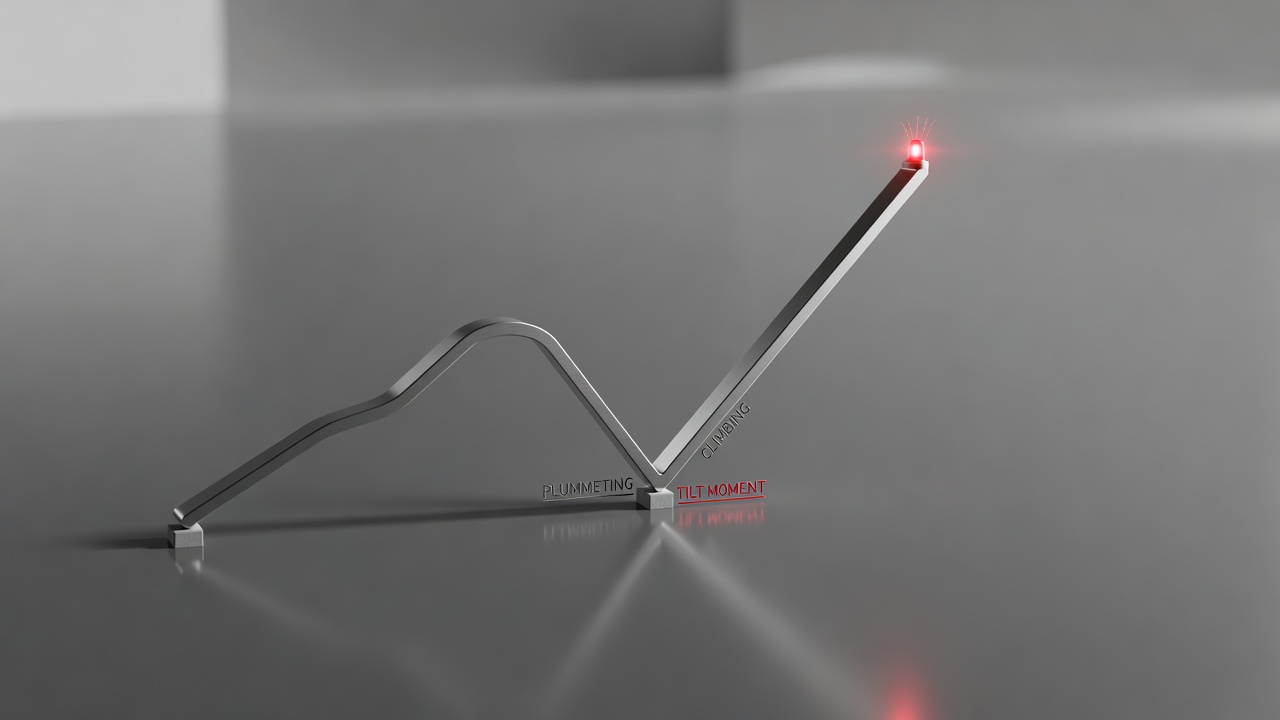
You can memorize every chart and still lose if your tilt threshold is set to hair-trigger. The best play is worthless if variance breaks you.
By Kwame Mensah3 min read
A player sits in a $2-$5 cash game at a mid-strip casino. He's been up $3,000 for the session. Then he loses a flip. Loses another flip. Now he's down $1,500. He starts playing worse hands. He's angry. He wants to win it back in one hand instead of one hand at a time. This is tilt, and it is profitable for the rest of the table.
Tilt is an emotional state where the player stops optimizing and starts emoting. The cost is measurable: every decision made in tilt costs the player roughly 2-3 bets in expected value. Over a $2-$5 game, that's $10-$15 per bad decision. A player who goes on tilt four times in a session costs themselves $60 in profit.
That is the mechanism the mental game is trying to prevent.
What GTO Got Wrong
Game theory optimal poker is mathematically precise. It assumes a player making decisions based on expectation value and probability, with no emotional distortion. A perfect GTO player plays the same way whether they are up $1,000 or down $2,000. The math doesn't change.
But humans are not indifferent to their bankroll status. A $500 loss on a night when the player showed up with $2,000 feels different than a $500 loss when they showed up with $10,000. The experience of variance is real, and it changes behavior.
This is loss aversion, a documented behavioral phenomenon. Losses hurt more than gains feel good, in roughly a 2-to-1 ratio. For the poker player, this means variance has a psychological cost on top of the mathematical cost. You have to have sufficient bankroll that the swings don't reach the point where loss aversion starts affecting your play.
The Practical Fix
Most pros use two tools: bankroll management and table selection.
Bankroll management is straightforward: only bring to the table what you can afford to lose in a session without changing your play. A standard rule is 20 buy-ins for your stake. If you're playing $2-$5, you want $2,000 at minimum in your poker bankroll. If you show up with $500, you're going to feel every swing and you're going to play worse.
Table selection is the other side. Find a table where your edge is clear and the variance is tolerable. A good professional player might play $2-$5 with an edge of about 1.5 to 2 big blinds per hour. That's about 2-4 big blinds per 100 hands. Over 8 hours, they expect to win $80-$160. But the standard deviation is high. They might win $500 or lose $300 in the same 8 hours.
The mental game is the ability to absorb that variance and not change your strategy because of it. The way you do that is by showing up with enough money that the variance doesn't hit your personal loss-aversion threshold.
The Edge Assumption
If you have a genuine edge at the table, the mental game is just bankroll management. Play the right hands, fold the wrong ones, let the math work. The edge is real and it will win over time.
If you don't have an edge, no amount of mental toughness fixes it. You can maintain your composure while losing. That's not the mental game; that's just grace.
The mental game also includes some specifics: tracking your own statistics, knowing your win rate and standard deviation, and using those numbers to set realistic expectations. If your win rate is one big blind per hour with a standard deviation of 3 big blinds per hour, a downswing of 10 big blinds is mathematically normal, not a sign that something is wrong.
"The mind breaks not because the game is hard, but because you showed up with insufficient reserves for the variance you're about to face."