
Regulation
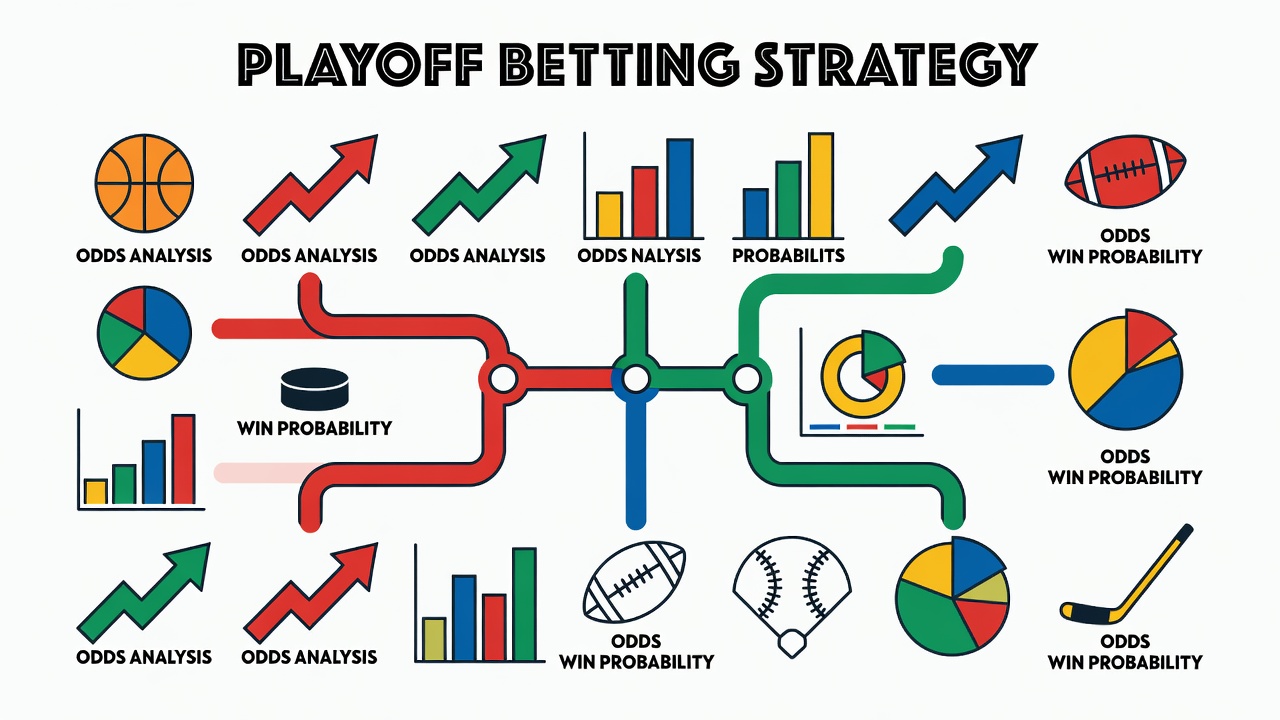
Playoff Betting Strategy Across Major Sports
In playoff betting, the dynamics of the game change. Teams play with desperation. The variance increases. The strategies that worked in the regular season may not work in the playoffs.
By Kwame Mensah3 min read
The regulatory framework for playoff betting is the same as regular season betting. The sportsbooks are licensed. The operators are regulated. The limits on bet sizes and the self-exclusion provisions remain in effect. The mathematics of the markets, however, change significantly.
In the regular season, teams play to improve their record. They manage injury risks. They rest key players occasionally. The games matter, but they matter in a cumulative way. One loss in October doesn't end your season if you're in first place.
Key Concepts
In the playoffs, every game is elimination. A loss ends your season. This changes team behavior fundamentally. Teams play with greater intensity. The variance in the games increases. Upsets are more common.
From a sportsbook perspective, playoff betting is higher variance. The lines are tighter because the probabilities are less certain. A team that was favored 80 percent in the regular season might be favored only 65 percent in a playoff game.
The strategic difference for bettors: the regular season is about finding edges through analysis and model building. The playoffs are about recognizing that models break down under stress. The team that was slightly favored all season might play dramatically better or worse in elimination games.
One specific dynamic: the rest advantage. If one team has an extra day of rest, this is more valuable in the playoffs than in the regular season. A fresh team plays better under elimination pressure. Sportsbooks account for this by adjusting the lines based on rest, but they often under-adjust.
Another dynamic: home field advantage. In the regular season, home field is worth roughly 2 to 3 percent EV. In the playoffs, especially in elimination games, home field advantage can be worth 5 to 10 percent. The crowd noise and energy are more impactful when the game is win-or-go-home.
The regulatory concern is that playoff betting attracts more casual bettors. The intensity and emotional investment are higher. This drives more action, which increases the volume of bets and the risk of problem gambling. Regulators typically monitor playoff periods more carefully for compliance with self-exclusion policies.
From a market efficiency perspective, playoff markets are less efficient than regular season markets. There is more disagreement about valuations because the models are less reliable. This creates more opportunity for informed bettors, but also more opportunity for bettors to make mistakes.
The mathematical approach: if you have a model that works in the regular season, reduce the confidence in that model for the playoffs. The playoffs have higher variance, lower sample sizes, and different incentive structures. Your edge in the regular season (if you had one) may not persist.
One consideration specific to the playoffs: revenge factor. A team that lost to another team in the regular season might play with additional motivation in a playoff rematch. The narrative weight of revenge is greater in the playoffs. Sportsbooks may not fully account for this psychological factor.
Regulatory compliance during the playoffs: operators are required to offer betting limits that are appropriate for the bettor's account history. A bettor with a history of losing should not be permitted to place unlimited bets, even in the playoffs. This is the operator's responsibility to monitor.
The volume of betting increases dramatically in the playoffs. The total action on a playoff game can be ten times the total action on a regular season game. This creates opportunities for sharp bettors to place large bets and move the market.
For the casual bettor, the playoff strategy should be simpler: understand that variance is higher and models are less reliable. Bet smaller. Avoid the exotic bets where the house edge is highest. Focus on the main bets where the lines are most efficient.