
Poker
How Poker Tournaments Structure Blinds and Antes
A poker tournament is a pressure cooker. Blinds rise every 20, 30, or 40 minutes. Each rise forces decision-making.
By Alex Chen3 min read
A poker tournament is a pressure cooker. Blinds rise every 20, 30, or 40 minutes. Each rise forces decision-making. Players who were folding 80% of hands must now play tighter because their stack is shrinking. The entire tournament architecture rests on blind structure.
The Blind Levels
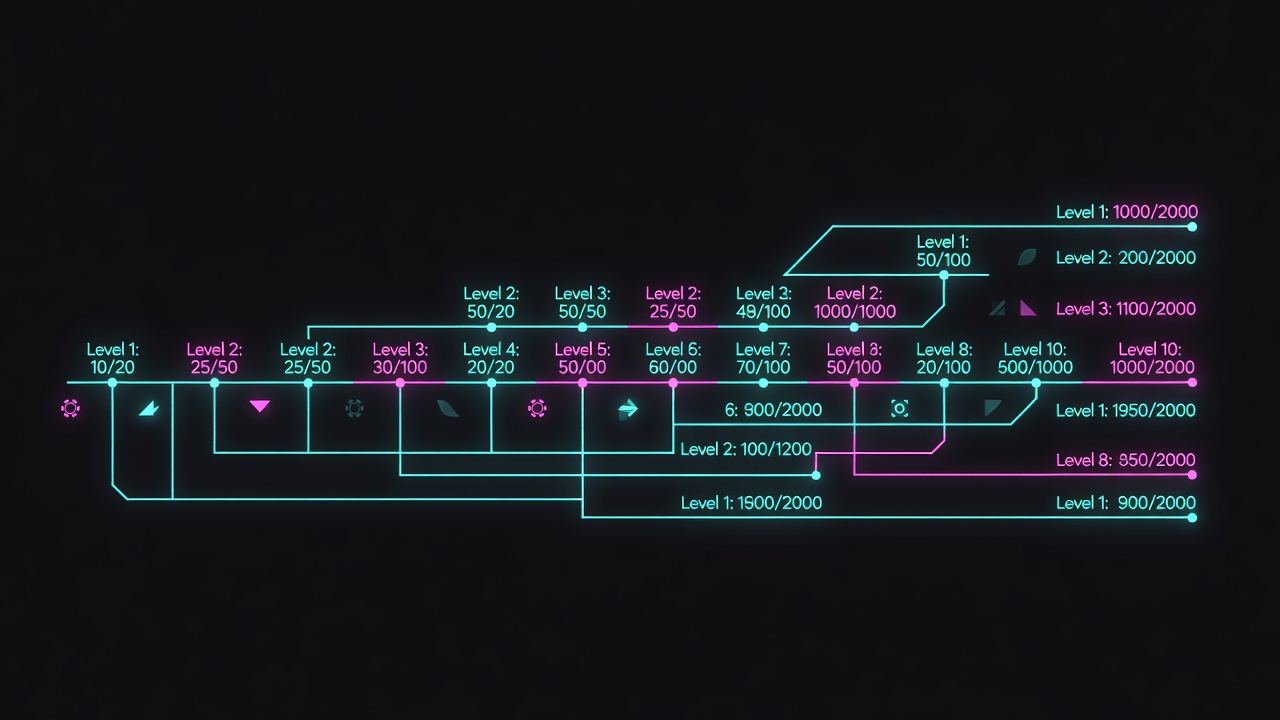
A typical tournament starts at 10-20 blinds (small blind 10 chips, big blind 20 chips). After 30 minutes, blinds move to 15-30. Then 25-50. Then 50-100. The progression is exponential; usually 25%, 50%, or 100% increase per level. The faster the increase, the more aggression the tournament demands.
The WSOP uses 50-minute levels for the first two days, then 40 minutes. The European Poker Tour uses 75-minute levels early and 45 minutes later. Online tournaments often use 20-minute levels because variance is lower online and players are accustomed to speed.
Why does this matter for design? Because the blind level determines urgency. At 10-20 with a 2,000-chip starting stack, you have 100 big blinds. You can afford to wait for premium hands. At 50-100 with the same stack, you have 20 big blinds. You must act.
Antes and ICM
Antes are additional forced bets that all players pay, unlike blinds which only the small and big blind pay. An ante adds pressure across the entire table. Antes are common in later stages to accelerate play.
A typical tournament starts with no ante, then introduces a 1-5 or 1-10 ante as blinds increase. The ante increases as blinds increase.
The purpose is mechanical. With antes, the pot is larger before anyone acts, so folding is more costly. Players must play more hands. Antes also create larger pots for shorter-stacked players, increasing their winning probability with marginal hands.
The blind structure is the tournament's heartbeat. It forces the game into phases: tight selection, aggressive play, then all-in-fold.
ICM (Independent Chip Model) determines how payouts work. If eight players remain and 20,000 chips are in play, a player with 2,000 chips has 10% of the chips and roughly 10% chance of winning, translating to 10% of remaining prize pool. ICM allows tournaments to end with chip trading rather than playing to one winner.
Flat vs Steep Structures
A flat structure (small increases, long levels) favors skilled players. You have time to exploit opponents and build edges. A steep structure (large increases, short levels) favors aggressive players and variance. You are forced to gamble.
Tournament designers use structure to target audiences. High buy-in tournaments use flat structures. Low buy-in tournaments use steep structures. Many online casinos use excessively steep structures to reduce server load and accelerate tournaments.
Modern Innovations
Some tournaments now use dynamic blind structures that adjust based on average chip stack. If stacks are deep, blinds move every 60 minutes. If stacks are short, blinds move every 30 minutes. This keeps pace consistent regardless of buy-in or skill level.
The best tournaments balance phase length with progression. You want each phase long enough for skill to manifest but short enough for pressure to increase steadily. The ideal rhythm is 40 minutes per level with antes at the midpoint. Most professionals agree on this framework.