
Crypto Gambling
How to Set Up a Crypto Wallet for Online Casino Play
Setting up a cryptocurrency wallet for casino play requires understanding the distinction between custodial and non-custodial systems, and accepting that responsibility for one's digital assets rests entirely with the individual.
By Dmitri Volkov3 min read
The establishment of a cryptocurrency wallet suitable for casino transactions involves several preliminary steps. The prospective user must first determine whether a custodial system (whereby a third party retains control of one's assets) or a non-custodial system (whereby the user retains control) is preferable.
For the novice, a custodial exchange wallet presents certain advantages. Services such as Coinbase or Kraken manage the technical complexity. One establishes an account, verifies identification, deposits fiat currency, and purchases cryptocurrency. The exchange then holds the cryptocurrency in a wallet. Withdrawals to external addresses are straightforward. The disadvantage is that the exchange controls the private keys, and therefore controls access to the funds.
Key Concepts
A non-custodial wallet, by contrast, places full responsibility with the user. Services such as MetaMask (browser-based) or hardware wallets (like Ledger or Trezor) generate private keys that only the user possesses. To deposit cryptocurrency to a casino, one sends it from their wallet to the casino's address. To withdraw, one requests the casino send funds to one's wallet address.
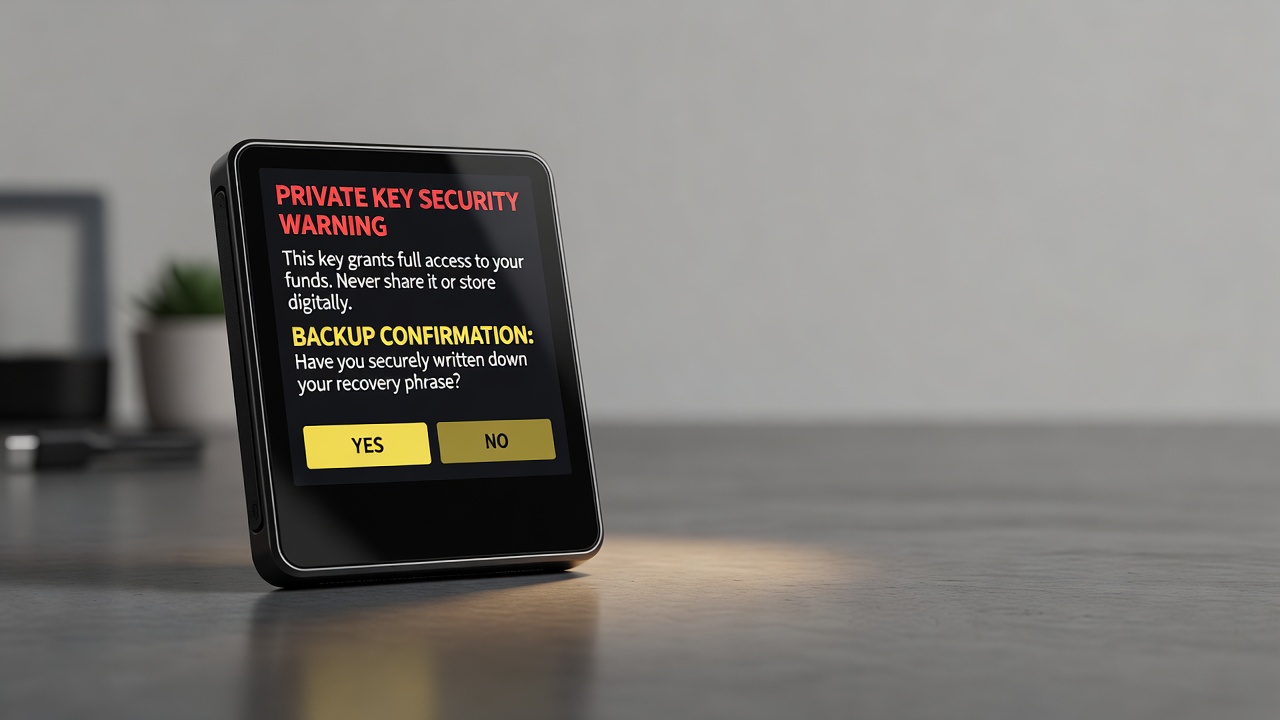
The technical setup of a non-custodial wallet: one downloads the wallet software, generates a private key (a long string of characters that grants access to the funds), and secures that key. This is critical. If the private key is lost, the funds are permanently inaccessible. If the private key is compromised, funds can be stolen.
The practical implementation: one should consider a hardware wallet (a small physical device that stores the key offline) for amounts above a few hundred dollars. A hardware wallet mitigates the risk of key compromise through malware or phishing. For smaller amounts used for regular casino play, a browser wallet such as MetaMask is acceptable.
Once the wallet is established, one must verify the casino's deposit address before sending funds. Copy and paste the address rather than typing it manually. A single mistyped character will send funds to an address that does not exist, and the transaction is irreversible.
The gas fees associated with blockchain transactions deserve specific attention. On Ethereum, transferring funds to a casino address incurs a fee that varies based on network congestion. One might expect to pay 5 to 50 dollars per transaction. Bitcoin transfers incur higher fees. Polygon or other lower-congestion chains incur lower fees.
The timing consideration: one should initiate transfers during periods of low network congestion if possible. This reduces the gas fee. Checking a service such as Etherscan before transferring provides real-time fee information.
Once funds are deposited at the casino, they exist on the casino's blockchain address, not in your wallet. The casino credits your account balance. You are now playing with casino funds, not your own cryptocurrency. The transaction is, for practical purposes, complete.
Withdrawals follow the reverse path. You request a withdrawal from the casino to your wallet address. The casino sends the cryptocurrency to your specified address. This again incurs a gas fee (paid by the casino or charged to you, depending on terms).
Security considerations: use a strong password for any account that controls access to your wallet. Enable two-factor authentication where available. Do not share your private key with anyone. Do not store your private key in plaintext in emails or cloud storage.
A practical approach for regular casino players: maintain a small non-custodial wallet for frequent deposits and withdrawals (perhaps 500 to 1,000 dollars worth of cryptocurrency). Keep larger reserves in a custodial account or a hardware wallet. This balances convenience with security.
The responsibility for fund security rests entirely with the individual. The casino is not responsible if you send funds to an incorrect address. Your wallet provider is not responsible if you lose or compromise your private key. This is the trade-off of decentralised systems: freedom and control at the cost of personal responsibility.