
Guides
Texas Hold'em Rules: Complete Beginner's Guide
Texas Hold'em is the most common poker variant in casinos worldwide, and understanding its basic rules is the foundation for intelligent play. Here's what happens at the table, from the deal through showdown.
By Alex Chen3 min read
Texas Hold'em unfolds in a strict sequence: two private cards dealt face-down, followed by a community board that reveals five cards in stages, with betting rounds between each stage. The goal is simple: make the best five-card hand using any combination of your two cards and the five on the board.
Let me walk through the mechanics the way I'd explain a Bally cabinet's reel-stop system. Precision matters. Each hand starts with button position, which rotates clockwise. The two players left of the button post mandatory bets called blinds. The small blind posts first, the big blind posts double, and this forces action into the pot from the beginning.
Key Concepts
Then comes pre-flop. The player to the big blind's left acts first. They have three choices: fold (quit the hand), call (match the big blind), or raise (bet more). Action moves clockwise until everyone has either folded or matched the highest bet.
Once pre-flop betting ends, the dealer burns a card face-down and reveals three community cards face-up. This is the flop. A new round of betting starts with the first active player left of the button. Players again fold, call, or raise. Everyone with skin in the pot must match the highest bet to stay.
Next comes the turn. The dealer burns another card and reveals one more community card. This is the fourth board card. Another betting round follows the same structure.
Finally, the river. Dealer burns again, reveals the fifth and final community card. A final betting round happens. If more than one player remains, there's a showdown. Players at the table reveal their hole cards, and the best five-card poker hand wins.
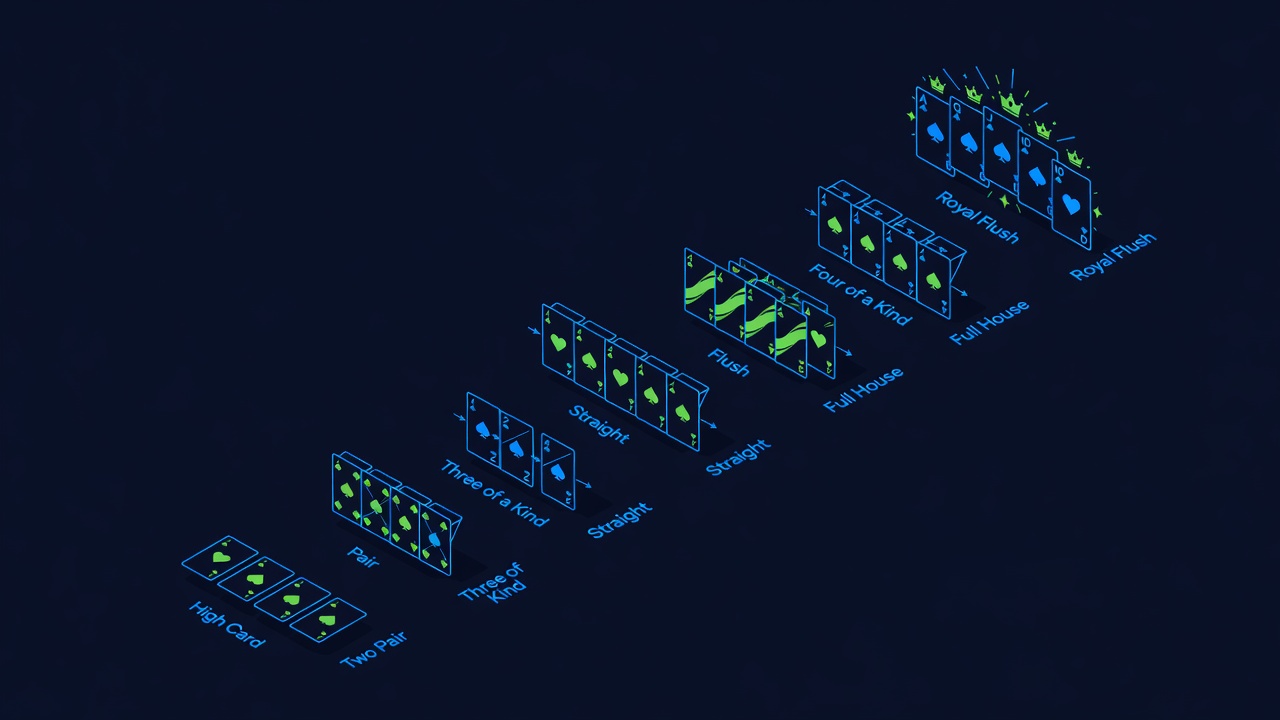
Hand rankings are fixed: high card, one pair, two pair, three-of-a-kind, straight, flush, full house, four-of-a-kind, straight flush, and royal flush at the top. Nothing mystical. The algorithm is ironclad.
Why does this matter? Because Texas Hold'em's structure creates a specific flow of information. You see three cards early, then one at a time. Each stage gives you new data about what's possible on the board. A good player doesn't just look at their hand; they adjust their thinking as the board develops. The same two cards that looked strong before the flop might look weak after the turn.
Most casinos run 6-max tables (six players) or full-ring tables (nine players). Some run heads-up (two players) for high-stakes games. The position you're in matters enormously. If you act last, you have more information than the player who acts first. That's not luck; that's geometry.
Tournament Hold'em and cash-game Hold'em follow the same rules but run differently. In tournaments, your chips don't reload. In cash games, you buy in for what you want to play, and chips represent real money. Tournament play tightens strategy; cash play is looser.
The blind structure in tournaments increases over time, forcing action and eliminating short stacks. Cash games have static blinds. You choose your game: a 1/2 blinds table means small blind is 1 dollar, big blind is 2 dollars, and that's your risk per hand. A 5/10 table moves faster in terms of money.
One thing I see beginners miss: the power of position and folding. You don't need to play every hand. Strong positions deserve wider hand ranges. Weak positions demand premium holdings. Folding is a skill. Most breakeven players play too many hands from bad spots.
Another key: the pot odds. If the pot is 100 dollars and you need to call 20 to see the next card, you're getting 5 to 1 odds. You need a 20 percent chance to hit your draw to break even. Most draws don't have that. Most calls bleed money. Count the pot and be honest about your math.
Texas Hold'em rewards patience and precision. It's not a card-flip game; it's a decision game. Every street, you decide. And every hand you fold is a hand you don't lose.