
Blackjack
Croupier 1998: Clive Owen's Cult Casino Noir Explained
Mike Hodges' Croupier isn't about winning money, not really; it's about a man who believed he could observe without participating, tell the truth without cost, live in the world of high-stakes gambling without letting it touch him, which is, of course, impossible.
By Sara Lindqvist3 min read
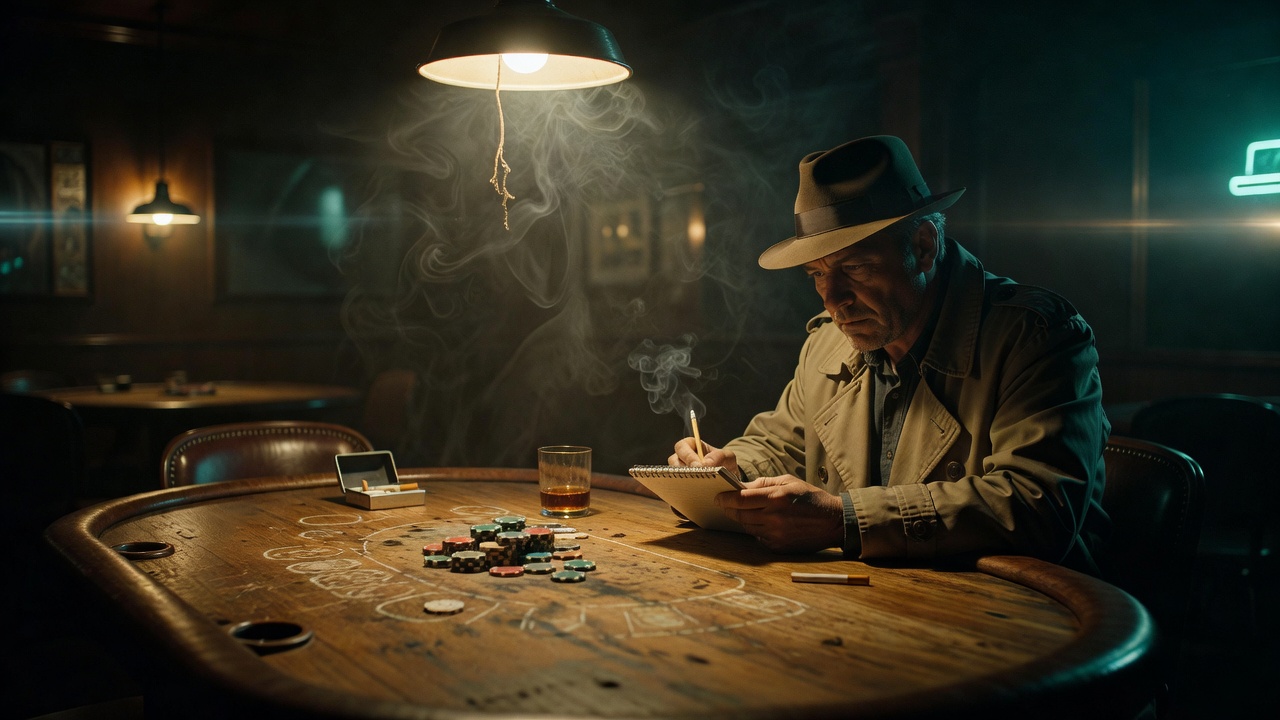
Croupier opens in 1998 with Clive Owen as Jack, a failed writer working as a blackjack dealer in a London casino, telling himself it's temporary research for the novel he will never finish. The movie understands immediately what Jack cannot accept: he is already inside it. The casino is not a setting he will eventually leave; it is a machine designed to trap people who believe they're smarter than the machine.
Owen's performance is the whole thing. His narration is dry, intelligent, self-aware to the point of delusion. He describes the casino world with precision, names the behaviors, identifies the marks, explains the rhythms of play. He sounds like a man who has figured everything out. And he has figured nothing.
Key Concepts
The plot moves through corruption: a small scam at his table, a woman who may or may not be conning him, players who lose their lives to the house, and slowly the realization that his position as observer was always an illusion. The house doesn't need him to understand its power; it just needs him to show up and deal. His intelligence, his narration, his certainty that he sees what's happening while remaining unmoved by it, becomes the very thing that destroys him.
Hodges does something filmmakers often miss: he makes the casino itself a character, not a backdrop. The green felt, the sound of chips, the exhaustion on faces at 4 in the morning, the dealer's bland authority. The film shows how the place operates by showing what Jack refuses to see: that everyone, dealer and player and owner alike, is trapped inside the mechanism. The croupier stands apart by design, neutral, professional, and this neutrality is the trap. Participating without participation is still participation.
The film's genius is in recognizing that Jack's narrative sophistication, his ability to articulate how gamblers deceive themselves, is itself a form of self-deception. He can describe the woman's con but cannot see his own. He can identify a mark but is becoming one. His intelligence is not protection; it is the particular shape of his vulnerability.
What makes Croupier endure is that it doesn't resolve this neatly. The film ends with Jack still inside, still narrating, still believing he understands a thing he continues to misunderstand. The ending is not redemption or catharsis. It's just the next shift.
The film was written by Paul Mayersberg and adapted from his own novel, so the intelligence of the language, the precision of the observations about how gambling works and how casinos manage desire, is foundational. The screenplay trusts the audience to follow complex ideas about self-deception and the mechanics of human psychology without spelling them out.
Owen's later work was bigger and more celebrated, but Croupier remains the more complete performance: a man using intelligence as armor, narration as protection, and observation as a kind of addiction. He survives the film but has lost the ability to leave. The casino has won not by taking his money but by making him indispensable to itself.
The movie argues that some worlds are designed so that your attempt to remain separate from them is what binds you most completely. The position of observer is not outside the system; it is a position the system creates and needs. Jack learns this the hard way, or doesn't learn it at all. The narration continues, which means he never will.